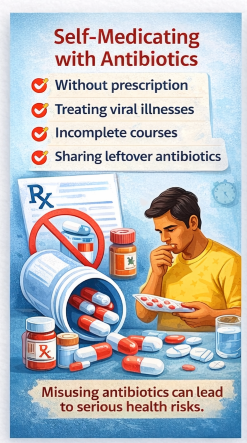
As a pharmacist working closely with patients every day, I see one habit in India that worries me the most – using antibiotics without a doctor’s prescription. Many people believe antibiotics are “strong medicines” that can cure any infection quickly. Some use old prescriptions, some take advice from friends, and some directly ask for antibiotics at medical stores.
This habit looks harmless at first, but in reality, it is silently creating a major health crisis. Antibiotic misuse affects not only one person, but entire families, communities, and future generations. In this article, I will explain why this habit is dangerous, how it harms your body, and what we must do to stop it – from a pharmacist’s real-life experience.
1. Why People Take Antibiotics Without Prescription in India
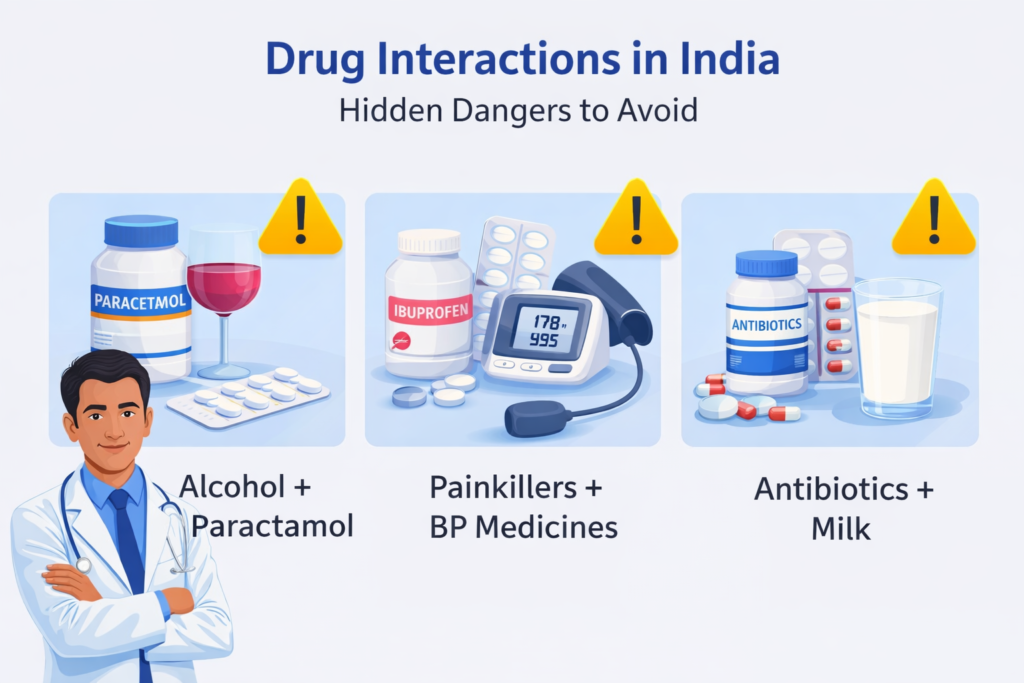
Misusing antibiotics without prescription is just one of many medicine safety mistakes Indians commonly make at home. In India, antibiotics are often seen as a “quick fix” medicine. When someone has fever, cough, sore throat, stomach infection, or even body pain, the first thought is: “Let me take an antibiotic.” This thinking comes from years of misuse and lack of awareness.
One major reason is easy availability. In many places, antibiotics are still sold without proper prescriptions. Another reason is past experience. A patient once took an antibiotic and felt better, so they assume it will work again for every illness. Some people also stop consulting doctors due to high consultation fees or lack of time.
As a pharmacist, I often hear sentences like:
- “Doctor gave this last time.”
- “My neighbor used this antibiotic.”
- “Just give me something strong.”
The problem is that not all infections need antibiotics, and not all antibiotics suit every infection. What worked once may be dangerous the next time. This misunderstanding is one of the biggest reasons antibiotic misuse continues in India.
2. Antibiotics Do NOT Work for Viral Infections
One of the most common and dangerous mistakes is using antibiotics for viral infections. Antibiotics work only against bacteria, not viruses. Diseases like common cold, flu, COVID-19, viral fever, dengue, and most sore throats are caused by viruses.
Yet, many people start antibiotics on the very first day of fever or cold. From my pharmacy experience, I can say that more than half of unnecessary antibiotic use is for viral illnesses.
When antibiotics are taken for viral infections:
- They do not speed up recovery
- They do not reduce fever
- They only add side effects
Instead, the body needs rest, fluids, and sometimes supportive medicines — not antibiotics. This misuse confuses the body, harms gut bacteria, and trains harmful bacteria to become resistant.
Doctors and pharmacists worldwide agree on one thing:
Using antibiotics for viral infections is completely useless and harmful.
3. Antibiotic Resistance: The Silent but Serious Threat
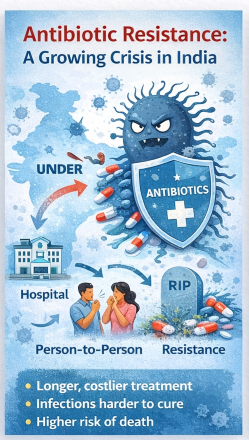
Antibiotic resistance is not a future problem- it is already happening in India. When antibiotics are taken unnecessarily or incorrectly, bacteria learn how to survive them. Over time, these bacteria become “stronger” and stop responding to medicines.
As a pharmacist, I now see infections that earlier needed simple antibiotics but now require stronger, costlier, and more toxic medicines. Some patients don’t respond even to advanced antibiotics.
Antibiotic resistance leads to:
- Longer illness duration
- Higher hospital bills
- More complications
- Increased death risk
The most frightening part is this:
Resistance spreads from person to person.
Even if you misuse antibiotics, the resistant bacteria can spread to your family and community.
India is already one of the countries with highest antibiotic resistance rates. If this continues, even minor infections could become life-threatening in the future.
4. Stopping Antibiotics Early Makes the Problem Worse
Another common mistake I see daily is not completing the antibiotic course. Many people stop taking antibiotics as soon as they feel better- usually after 2–3 days.
This is extremely dangerous.
When you stop antibiotics early:
- Weak bacteria die first
- Strong bacteria survive
- These surviving bacteria become resistant
This means the infection may come back stronger, and the same antibiotic may not work again. Patients then say, “This medicine doesn’t suit me anymore.” In reality, the bacteria have adapted because the course was incomplete.
Doctors prescribe antibiotic duration very carefully. Completing the full course ensures all bacteria are destroyed, not just the weak ones.
As a pharmacist, I always remind patients:
Feeling better does not mean the infection is gone.
5. Side Effects and Long Term Damage of Antibiotic Misuse
Many people think antibiotics are harmless. But in reality, they can cause serious side effects, especially when used without medical supervision.Antibiotics can also cause serious problems when combined with other medicines, leading to harmful side effects and treatment failure.
Common problems include:
- Stomach pain and acidity
- Diarrhea and vomiting
- Fungal infections
- Skin rashes and allergies
Long-term misuse can lead to:
- Damage to gut bacteria
- Weak immunity
- Repeated infections
- Liver and kidney stress
I have seen patients who frequently use antibiotics suffer from chronic stomach problems and low immunity. Children and elderly people are at even higher risk.
Antibiotics should be used only when clearly needed, because once the natural balance of the body is disturbed, recovery takes time.
6. Using Old Prescriptions or Sharing Antibiotics Is Unsafe
Another dangerous habit is using old prescriptions or sharing antibiotics with family members. Many people keep strips of antibiotics at home and reuse them whenever similar symptoms appear.
This is unsafe because:
- The infection may be different
- The dose may be wrong
- The duration may be incorrect
Each infection, patient, age group, and health condition is different. A medicine suitable for one person can be harmful to another.
As a pharmacist, I strongly advise:
1. Never reuse old antibiotic prescriptions
2.Never share antibiotics with others
7. Responsible Use: What Indians Must Start Doing Now
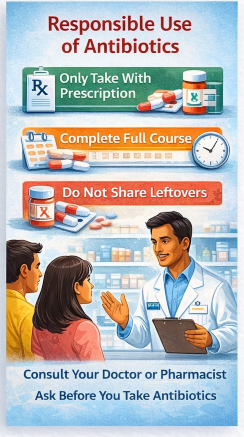
Stopping antibiotic misuse is possible if everyone takes responsibility – patients, pharmacists, and doctors.
Here is what you should do:
- Take antibiotics only with a valid prescription
- Never demand antibiotics unnecessarily
- Complete the full prescribed course
- Do not use leftover antibiotics
- Ask your pharmacist if you have doubts
As a pharmacist, my role is not just to dispense medicines but to protect public health. Antibiotics are life-saving medicines — but only when used correctly.
Final Words from a Pharmacist: My Honest Advice to Every Indian Family
As a pharmacist, I do not just see medicines – I see people, families, and the long-term effects of wrong medicine use. Over the years, I have noticed one painful truth: most antibiotic damage does not happen because of disease, but because of misuse.
Many patients come to me saying, “This antibiotic worked last time” or “Give me something strong.” They don’t realize that antibiotics are not painkillers or fever medicines. They are powerful tools meant for specific bacterial infections, and when used wrongly, they slowly lose their power.
What worries me the most is that antibiotic misuse does not harm only one person. It affects entire communities. Resistant bacteria spread silently — from homes to hospitals, from one patient to another. A simple infection that was once easy to treat now becomes dangerous, expensive, and sometimes life-threatening.
I have personally seen patients suffer because common antibiotics stopped working for them. They had to take stronger medicines with more side effects and higher costs. Some stayed hospitalized longer than necessary – all because of antibiotic misuse in the past.
As a pharmacist, my humble request is this:
Do not treat antibiotics as “routine medicines.”
Never self-medicate.
Trust your doctor’s diagnosis.
Complete the full course if prescribed.
Antibiotics are a gift of modern medicine. If we respect them, they will protect us. If we misuse them, we may lose them forever.
A little awareness today can save lives tomorrow – including your own and your children’s.
Frequently Asked Questions (FAQs)
Q1. Can I take antibiotics for fever or cold?
No. Most fevers and colds are viral. Antibiotics do not work against viruses.
Q2. Is it safe to reuse an old antibiotic prescription?
No. Each illness is different. Old prescriptions can be harmful.
Q3. What happens if I stop antibiotics early?
The infection may return stronger and become resistant.
Q4. Why is antibiotic resistance dangerous?
It makes infections harder and sometimes impossible to treat.