Introduction
Many people tell me the same thing again and again:
“I am using face wash, serum, moisturizer, sunscreen… still my skin is dull. Why?”
As a pharmacist, I see this problem daily. People invest money, time, and hope into skincare, but the results don’t match their expectations. Slowly, frustration starts. Some people keep changing products every week, some start using stronger chemicals, and some completely give up on skincare.
The truth is very simple but often ignored: skincare works only when it is done correctly, patiently, and according to your skin’s real needs.
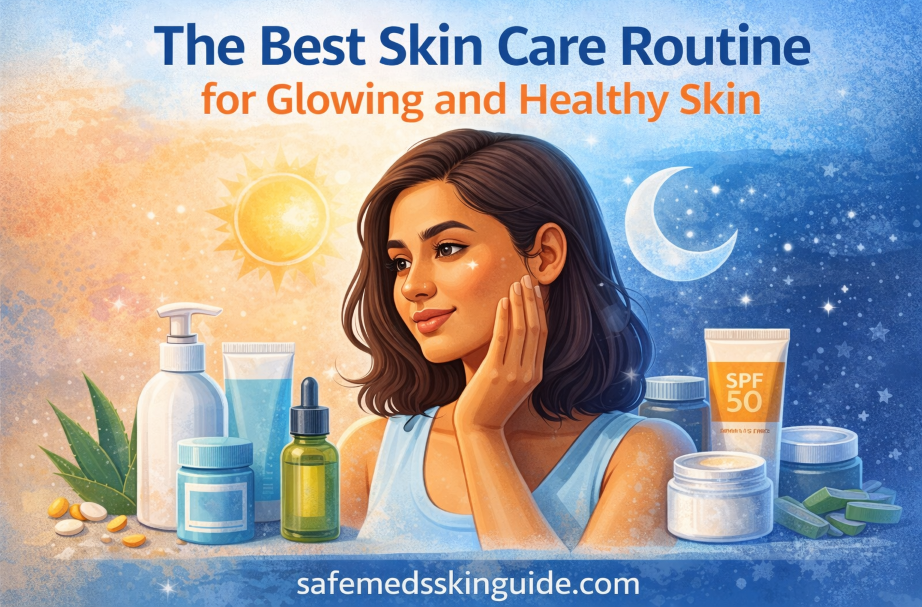
Glow is not magic. Glow is a sign of healthy skin, not expensive products.
In this article, I will explain the real reasons why your skin is not glowing even after using skincare products. I will also share my experience as a pharmacist, so you can understand what actually helps skin in the long run not just temporary shine.
1. You Are Using Products Not Meant for Your Skin Type
This is the most common mistake I see.
Before starting any skincare routine, you must know your skin type. Many people skip this step and directly copy routines from Instagram, YouTube, or friends. Later, when problems start, they blame the products.
Skin types are mainly:
- Normal skin
- Dry skin
- Oily skin
- Combination skin
- Sensitive skin
Each skin type behaves differently and needs different care. For example:
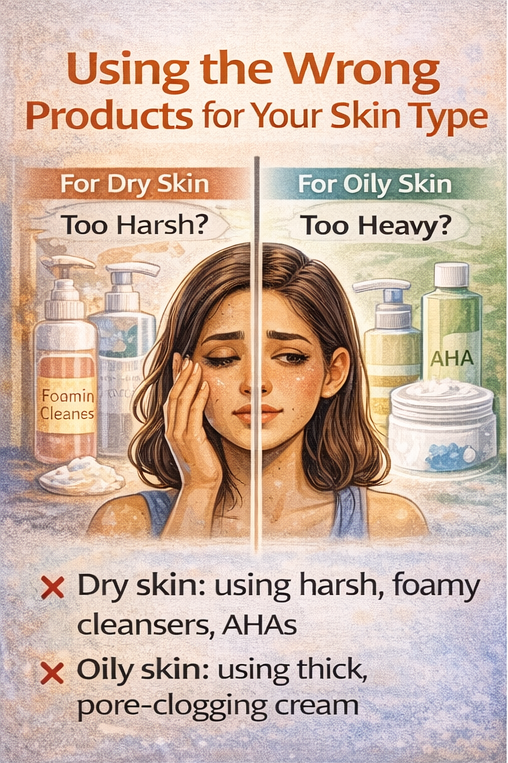
- Oily skin using heavy creams can clog pores and cause acne.
- Dry skin using strong foaming cleansers can make skin more dry and lifeless.
- Sensitive skin using strong actives can lead to redness, burning, and dullness.
As a pharmacist, I always say this clearly:
Using wrong products for your skin type slowly damages your skin barrier.
You may see temporary glow, but internally the skin becomes weaker. Over time, glow disappears completely.
Correct skin type = correct products = healthy glow.
From my experience as a Pharmacist , I have noticed that many skin problems improve simply when people stop using unsuitable products. Skin does not ask for more products, it asks for the right products. Once you start respecting your skin type, irritation reduces, texture improves, and natural glow slowly returns without forcing it Many health and skin problems also start because of lack of awareness about safe product use at home, which we have explained in detail in our guide on common medicine mistakes Indians make at home.
2. Overusing Active Ingredients (More Is Not Better)
Today, everyone talks about active ingredients:
- Vitamin C
- Retinol
- AHA, BHA
- Niacinamide
- Salicylic acid
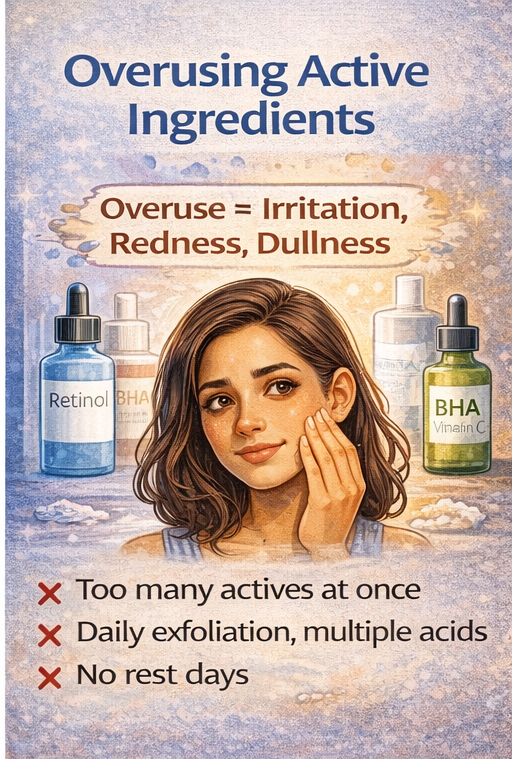
These ingredients are powerful, but powerful does not mean safe for daily overuse.
Many people use:
- Vitamin C in the morning
- AHA or BHA at night
- Retinol on alternate days
- Plus exfoliating scrubs
This is too much for the skin.
Overuse of actives leads to:
- Skin irritation
- Redness and burning
- Increased sensitivity
- Dull, tired-looking skin
As a pharmacist, I always remind people:
Skin is a living organ, not a surface to experiment daily.
Actives should be:
- Used slowly
- Used in low concentration
- Used with rest days
When skin is overloaded, it focuses on healing, not glowing.
In pharmacy practice, we always follow the rule: minimum effective dose. The same rule applies to skincare. When actives are overused, skin spends its energy repairing damage instead of glowing. Giving your skin rest days is not laziness-it is smart skincare
3. Skipping Sunscreen-The Biggest Glow Killer
You can use the best skincare products in the world, but if you skip sunscreen, everything is wasted.
Many people think:
- “I stay indoors, I don’t need sunscreen”
- “It’s cloudy today, no sun”
- “Sunscreen causes pimples”
All of these are myths.
UV rays:
- Damage collagen
- Cause pigmentation
- Slow down skin repair
- Make skin dull and uneven
As a pharmacist, I see people using brightening serums for years but skipping sunscreen. Then they ask why pigmentation is not improving.
Sun damage is silent but permanent.
No glow can survive without sun protection.
Daily sunscreen is not optional. It is the foundation of glowing skin. As i explained this in previious blod “ Skin care Routine for Glowing Skin “
I often explain to patients that sunscreen is not just a cosmetic product, it is preventive skin medicine. You may not see sun damage immediately, but it slowly cancels the benefits of every serum and cream you use. Consistent sunscreen use protects your future skin as much as your present glow.
4. Inconsistent or Wrong Night Skincare Routine
Night time is when your skin repairs itself. This is a medical fact. Night care is where healing happens. As a pharmacist, I see better results in people who keep their night routine simple and calming. Skin repairs best when it is not stressed. A gentle night routine gives your skin the chance to recover from daily damage.
Common night mistakes:
- Sleeping with makeup or dirt
- Skipping cleanser at night
- Not moisturizing because “skin is oily”
- Using harsh treatments daily
At night, skin:
- Repairs damage
- Produces new cells
- Restores moisture balance
If you skip night care or irritate your skin at night, morning glow is impossible.
A simple night routine works best:
- Gentle cleanser
- Mild treatment (only if needed)
- Moisturizer suitable for your skin type
As a pharmacist, I always say:
Night routine should calm the skin, not fight with it.
5. Ignoring Internal Factors (Diet, Water, Sleep, Medicines)
Skincare products work only on the surface. Glow also depends on what happens inside your body.Skin care is connected to internal health. Many people focus only on creams but ignore sleep, hydration, and nutrition. From a medical point of view, skin reflects what is happening inside the body. When internal balance improves, external skincare starts working better.
Internal factors that affect skin:
- Low water intake
- Poor diet (junk food, excess sugar)
- Lack of sleep
- Stress
- Certain medicines
As a pharmacist, I know many medicines can cause:
- Dry skin
- Acne
- Pigmentation
- Dullness
If internal health is poor, no cream can fix it fully.
True glow comes when:
- You sleep properly
- You drink enough water
- You manage stress
- You support your skin from inside
Self-medication can silently affect skin and overall health, which is why I strongly recommend reading about the dangerous habit of using antibiotics without prescription.
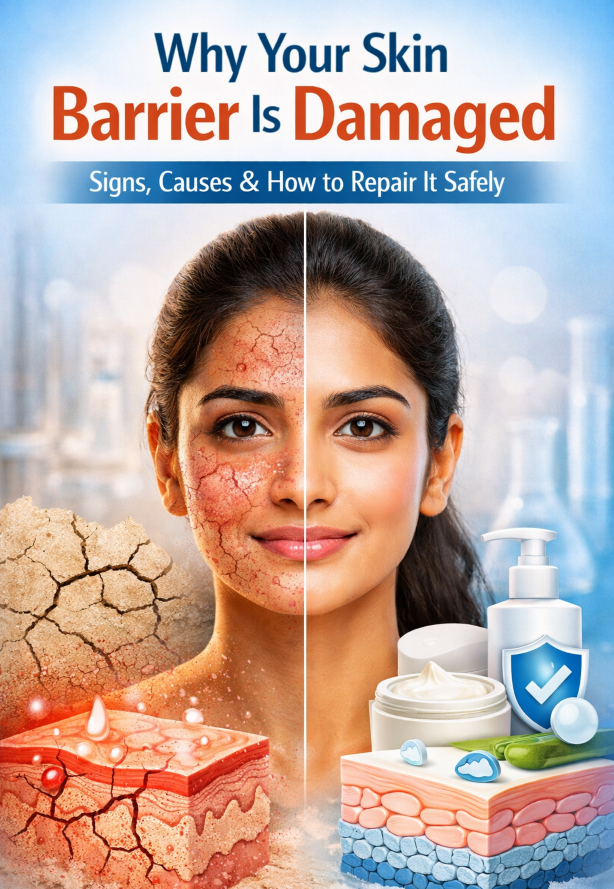
6. Damaged Skin Barrier-The Real Hidden Reason
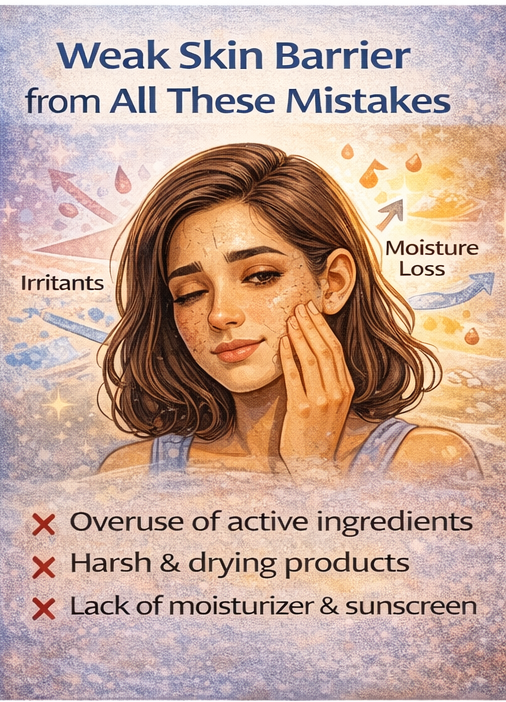
The skin barrier is your skin’s protective layer. Most people don’t know about it, but it is the key to glow.
When the barrier is healthy:
- Skin looks smooth
- Moisture stays inside
- Products work better
When the barrier is damaged:
- Skin becomes dull
- Products sting
- Acne and pigmentation increase
Causes of barrier damage:
- Over-exfoliation
- Too many actives
- Harsh cleansers
- Skipping moisturizer
As a pharmacist, I see this daily.
People think their skin needs stronger products, but actually it needs repair and rest.
Damaged skin barrrier is often misunderstood as “sensitive skin” or “bad skin.” In reality, it is a skin that needs repair, not punishment. As a pharmacist, I strongly believe that restoring the skin barrier is the fastest and safest path to long-term glow.
7. How to Fix These Mistakes Step by Step
If your skin is not glowing, don’t panic. Fixing skin takes time. Fixing skin issue does not require drastic changes. Small, consistent corrections give the best results. When skincare becomes gentle and regular, the skin slowly regains balance. In my experience, people who stay consistent see more improvement than those who keep chasing new products.
Basic rules:
- Identify your skin type
- Use fewer products, not more
- Protect skin from sun
- Repair the skin barrier
- Be consistent and patient
Glow is a result of healthy skin habits, not shortcuts.
Final Words–A Pharmacist’s Honest Advice
As a pharmacist, I want to say one important thing:
Skincare is not about chasing glow, it is about maintaining skin health.
Many people expect instant results. They compare their skin to filtered images and feel disappointed. But real skin needs time, care, and understanding.
Medicines and skincare products are tools—not magic. When used correctly, they support the skin. When misused, they silently harm it.
If your skin is not glowing:
- Don’t blame your skin
- Don’t jump to stronger products
- Don’t keep changing routines every week
Instead, ask:
- Am I protecting my skin?
- Am I respecting my skin type?
- Am I giving my skin time to heal?
Healthy skin glows naturally. It doesn’t need heavy makeup or constant treatments.
As a pharmacist, my advice is simple:
Be gentle, be consistent, and think long term.
Glow will come as a side effect of good skin health—not as a forced result.
Frequently Asked Questions (FAQs)
1. Why is my skin dull even after using good skincare products?
In most cases, dull skin is caused by wrong product selection, overuse of actives, or lack of sunscreen. As a pharmacist, I often see people focusing on products but ignoring skin type and consistency, which prevents real glow.
2. How long does skincare take to show visible results?
Skincare is a slow and steady process. Most people see improvement in texture within 3–4 weeks, while glow and even tone may take 6–8 weeks. Changing products too often delays results
3. Can medicines affect skin glow?
Yes. Certain medicines can cause dryness, acne, pigmentation, or dullness. This is why it is important to inform your doctor or pharmacist about skin changes during long-term medication use.
4. Is sunscreen really necessary for glowing skin?
Absolutely. Sunscreen prevents sun damage, pigmentation, and early aging. Without sunscreen, even the best skincare routine will fail to give long-term glow.
5. Why does my skin burn or sting after applying skincare products?
Burning or stinging usually means irritation or skin barrier damage. It is not a sign that the product is “working.” Stop the product and switch to gentle, barrier-repair skincare.
6. Can stress and lack of sleep affect skin glow?
Yes. Stress increases inflammation and hormonal imbalance, while poor sleep slows skin repair. From a medical point of view, healthy skin requires proper rest and stress management.
7. What is the safest way to get natural skin glow?
The safest way is a simple routine: gentle cleanser, moisturizer, daily sunscreen, proper sleep, hydration, and patience. Glow is a result of healthy skin, not harsh treatments.