Table of Contents
Introduction
What is skin barrier damage?
Skin barrier damage happens when the outer protective layer of the skin becomes weak, leading to moisture loss, irritation, redness, sensitivity, and frequent breakouts
Many people today complain that their skin suddenly feels sensitive, burns after applying products, breaks out easily, or looks dull despite using expensive skincare. They keep changing face washes, serums, and creams, thinking the problem is the product. But in most cases, the real problem is a damaged skin barrier.
Your skin barrier is your skin’s first line of defense. When it is healthy, your skin looks smooth, calm, hydrated, and naturally glowing. When it is damaged, even the best skincare products can irritate your skin instead of helping it. Unfortunately, modern skincare trends, overuse of active ingredients, steroid creams, and wrong product choices have made skin barrier damage very common.
As a pharmacist, I see people every day who unknowingly damage their skin barrier while chasing quick glow or instant results. The truth is, healthy skin does not come from more products, it comes from a stronger skin barrier. In this article, you will understand what the skin barrier really is, how it works, and why protecting it is more important than following any viral skincare routine.
What Is the Skin Barrier?
The skin barrier is the outermost protective layer of your skin, also known as the stratum corneum. Think of it like a wall made of bricks and cement. The skin cells act as bricks, and natural fats like ceramides, cholesterol, and fatty acids act as cement holding everything together.
This barrier has two very important jobs. First, it keeps moisture inside the skin, preventing dryness and dehydration. Second, it blocks harmful things from entering the skin, such as bacteria, pollution, allergens, and harsh chemicals. When this barrier is strong, your skin stays balanced, soft, and comfortable.
Many people confuse skin glow with skin health. Glow can be temporary and achieved with makeup or strong actives, but skin health depends completely on the strength of your skin barrier. If the barrier is weak, your skin loses water easily and becomes vulnerable to irritation, acne, redness, and infections.
From a pharmaceutical point of view, most chronic skin problems begin when this protective layer is disturbed. That is why understanding the skin barrier is the foundation of any safe and effective skincare routine.
How a Healthy Skin Barrier Should Work
A healthy skin barrier works quietly in the background, protecting your skin without you even noticing it. When your barrier is functioning properly, your skin feels comfortable, not tight or greasy. It maintains the right balance of oil and water, which is essential for a natural, healthy glow.
The barrier contains natural moisturizing factors, lipids, and ceramides that prevent excessive water loss. At the same time, it acts as a shield against environmental damage such as UV rays, pollution, dust, and microbes. This protection helps prevent inflammation, premature aging, and frequent breakouts.
When your skin barrier is healthy, skincare products absorb better and work more effectively. You don’t experience burning, stinging, or redness after applying basic products like moisturizer or sunscreen. Your skin also recovers faster from stress, sun exposure, or minor irritation.
As a pharmacist, I always tell people this simple truth: no serum or cream can fix your skin if your barrier is broken. Expensive products may give temporary results, but long-term skin health depends on how well you protect and support your skin barrier every single day.
Common Signs of a Damaged Skin Barrier
Your skin barrier works silently to protect you, but when it’s compromised, your skin starts sending clear warning signals. Many people confuse these signs with acne, allergies, or “bad skin days,” but they’re often symptoms of a weakened barrier.
1. Persistent Dryness and Tightness
If your skin feels tight even after applying moisturizer, it’s a strong sign your barrier isn’t holding moisture properly. A damaged barrier allows water to escape from the skin (known as transepidermal water loss), leaving your face feeling dry, rough, and uncomfortable throughout the day.
2. Increased Sensitivity and Stinging
Products that once felt gentle may suddenly cause burning, stinging, or itching. This happens because a weakened barrier allows irritants and chemicals to penetrate deeper into the skin, triggering inflammation and sensitivity.
3. Redness and Inflammation
Frequent redness-especially around the cheeks, nose, or chin-can indicate barrier damage. The skin becomes more reactive and struggles to calm itself, leading to visible irritation, blotchiness, or flare-ups even without obvious triggers.
4. Breakouts and Rough Texture
Ironically, a damaged skin barrier can cause more breakouts. When the skin is compromised, it overproduces oil to compensate for moisture loss, clogging pores. You may also notice uneven texture, tiny bumps, or a generally unhealthy skin appearance.
5. Slow Healing and Dullness
Cuts, pimples, or marks may take longer to heal, and your skin may look tired or dull. This is because the barrier plays a key role in skin repair and renewal-when it’s damaged, recovery slows down significantly.
Main Causes of Skin Barrier Damage (Mistakes Most People Make)
A damaged skin barrier does not happen overnight. In most cases, it is the result of daily habits and repeated mistakes that people don’t even realize are harmful. As a pharmacist, I often see people unknowingly harming their skin while thinking they are taking good care of it.
Let’s understand the most common causes one by one.
1. Over-Exfoliation and Using Too Many Active Ingredients
This is one of the biggest reasons behind skin barrier damage today.
Many people exfoliate their skin too often using scrubs, chemical exfoliants, peels, or strong serums. On top of that, they layer multiple active ingredients like retinol, AHA, BHA, vitamin C, and niacinamide without understanding how these ingredients work together.
Exfoliation removes dead skin cells, which is helpful only when done occasionally. When done too frequently, it strips away the skin’s natural protective oils and weakens the barrier. The skin becomes thin, sensitive, and inflamed.
As a pharmacist, I always explain this with a simple rule:
Skin needs recovery time, just like the body.
Using strong actives daily does not speed up results-it slows healing and causes long-term damage.
Signs of over-exfoliation include burning, redness, peeling, sudden acne, and loss of glow. If your skin reacts badly to basic products, overuse of actives is often the hidden reason.
2. Using Steroid Creams Without Prescription
This is a very serious and common problem, especially in India.
Many people use steroid creams for quick glow, fairness, acne, or redness based on advice from friends, shopkeepers, or social media. These creams give temporary smoothness and brightness, which makes people continue using them.
But medically speaking, steroids thin the skin and severely damage the skin barrier when used without supervision. Over time, they cause rebound acne, redness, burning, pigmentation, and extreme sensitivity.
As a pharmacist, I have seen patients whose skin became completely dependent on steroid creams. Once they stop, their skin flares badly because the barrier is already destroyed.
Steroid creams should never be used for cosmetic purposes. The short-term glow they give comes at the cost of long-term skin damage.
3. Using Products That Do Not Suit Your Skin Type
Another silent cause of barrier damage is using the wrong products for your skin type.
For example:
- Oily skin using harsh oil-control cleansers can overdry the skin
- Dry skin using gel-based or alcohol-heavy products can worsen dryness
- Sensitive skin using fragranced or strong products can cause irritation
When the wrong product is used daily, the skin struggles to maintain balance. Over time, the barrier weakens, moisture escapes, and irritation increases.
As a pharmacist, I always say:
If a product does not suit your skin, using it daily will slowly damage your skin barrier, even if there is no immediate reaction.
Listening to your skin is more important than following trends.
4. Harsh Cleansers and Washing the Face Too Often
Cleansing is important, but over-cleansing is harmful.
Many face washes contain strong surfactants that remove oil aggressively. Washing your face multiple times a day or using soap-like cleansers strips away natural oils that protect the skin barrier.
When natural oils are removed repeatedly, the skin becomes dry and irritated. In response, the skin may produce more oil, leading to acne and clogged pores. This cycle damages the barrier further.
From a medical perspective, natural oils are not enemies-they are part of the skin’s defense system. Gentle cleansing is enough to keep skin clean without harming the barrier.
5. Sun Damage and Skipping Sunscreen
Sun exposure weakens the skin barrier slowly but continuously.
UV rays damage skin cells, reduce ceramides, and increase inflammation. Even people who stay indoors are exposed to UVA rays through windows and screens.
Without sunscreen, the skin barrier becomes fragile, leading to pigmentation, dryness, and early aging. Many people complain that their skincare products don’t work, but the real issue is unprotected sun exposure.
As a pharmacist, I always remind people:
Sunscreen is not optional-it is a protective treatment for your skin barrier.
How to Repair a Damaged Skin Barrier Step by Step Routine
Repairing a damaged skin barrier is not about adding more products. In fact, healing starts when you remove stress from the skin. As a pharmacist, I always guide people to slow down and focus on repair before beauty.
Let’s go step by step.
Step 1: Stop All Harsh Products Immediately
The first and most important step is to pause anything that irritates your skin.
This includes:
- Exfoliating acids (AHA, BHA)
- Retinol and strong anti-aging creams
- Scrubs and peels
- Alcohol-based toners
- Fairness or steroid creams
Continuing these products while your barrier is damaged only delays healing. Your skin needs rest, not stimulation.
As a pharmacist, I often call this phase “skin fasting”. It doesn’t mean stopping skincare completely; it means stopping harmful products so the skin can recover naturally.
During this phase, your skin may look dull or slightly oily-but that is part of healing.
Step 2: Use a Gentle Cleanser Only
Cleansing should be supportive, not aggressive.
Choose a mild, soap-free cleanser that:
- Does not foam too much
- Has a skin-friendly pH
- Does not leave skin tight after washing
Wash your face:
- Twice daily (morning and night)
- Once daily if skin is extremely dry or irritated
Avoid hot water, which further damages the barrier. Lukewarm water is always better.
From a medical point of view, harsh cleansing is one of the biggest obstacles to skin barrier repair.
Step 3: Focus on Barrier Repair Ingredients
Once irritation is reduced, your skin needs ingredients that rebuild the barrier, not exfoliate it.
Look for:
- Ceramides – repair the “cement” of the skin
- Panthenol (Vitamin B5) – soothes and heals
- Glycerin – attracts moisture
- Hyaluronic Acid – hydrates the skin
- Niacinamide (low strength) – supports repair and reduces inflammation
Avoid high concentrations. Gentle formulations work best during recovery.
As a pharmacist, I recommend reading ingredient labels carefully. Fewer ingredients often mean better tolerance.
Step 4: Moisturize Properly, Day and Night
Moisturizer is not optional during barrier repair.
A good moisturizer:
- Seals moisture inside
- Prevents water loss
- Soothes inflammation
Apply moisturizer:
- After cleansing, while skin is slightly damp
- Morning and night
People with oily skin often skip moisturizer, fearing acne. But when the barrier is damaged, skipping moisturizer makes oiliness worse.
Healthy skin = balanced moisture.
Step 5: Sunscreen Is Non-Negotiable
Barrier repair will fail without sunscreen.
UV rays worsen inflammation and undo the repair process. Use a broad-spectrum sunscreen daily, even if you stay indoors.
If your skin is very sensitive:
- Choose fragrance-free sunscreen
- Mineral sunscreens may feel gentler for some people
As a pharmacist, I always say sunscreen is a protective medicine for the skin, not a cosmetic extra.
Ingredients to Avoid During Skin Barrier Repair
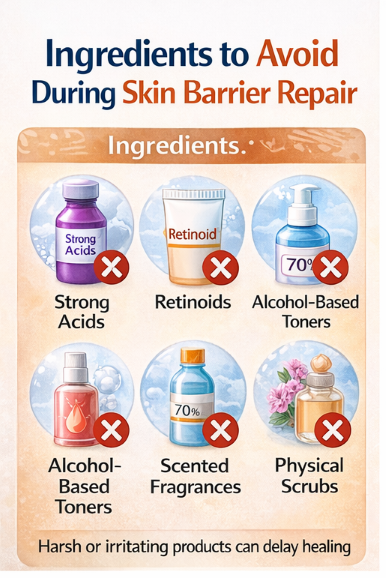
When your skin barrier is damaged, what you avoid is just as important as what you use. Many people unknowingly slow down healing by continuing ingredients that irritate or overstimulate the skin.
1. Strong Exfoliating Acids
Ingredients like glycolic acid, salicylic acid, lactic acid, and peeling solutions should be avoided during barrier repair. These acids remove dead skin cells, but when the barrier is already weak, they increase irritation, dryness, and redness.
2. Retinoids and Anti-Aging Actives
Retinol and similar vitamin A derivatives are powerful but harsh. During barrier repair, they can cause burning, peeling, and delayed healing. Retinoids should only be reintroduced after the barrier is fully restored.
3. Alcohol-Based Toners
Alcohol gives a temporary fresh feeling but strips natural oils. This worsens dryness and sensitivity. From a medical point of view, alcohol weakens the lipid layer of the skin barrier.
4. Fragrance and Essential Oils
Fragrance is a common cause of irritation, especially for sensitive or healing skin. Even natural essential oils can trigger inflammation when the barrier is compromised.
5. Physical Scrubs
Scrubs create micro-tears in the skin and delay repair. Healing skin needs gentleness, not friction.
As a pharmacist, I strongly advise: if an ingredient causes burning or redness, stop it immediately during barrier repair.
How Long Does Skin Barrier Repair Take?
Skin barrier repair is not instant. The healing time depends on how severe the damage is and how consistently you follow a gentle routine.
- Mild damage: 2–3 weeks
- Moderate damage: 4–6 weeks
- Severe damage (steroids or overuse of actives): 2–3 months or more
Early signs of healing include:
- Reduced burning or stinging
- Less redness
- Skin feels comfortable after washing
- Improved hydration
One important thing I tell patients is this: changing products too often resets the healing process. Patience and consistency are key.
If your skin continues to worsen despite gentle care, consult a dermatologist. Some cases require medical treatment.
Skin Barrier Repair Routine for Indian Skin & Climate
Indian skin faces unique challenges like heat, humidity, pollution, and sun exposure. Barrier repair routines must be practical and climate-friendly.
Morning Routine
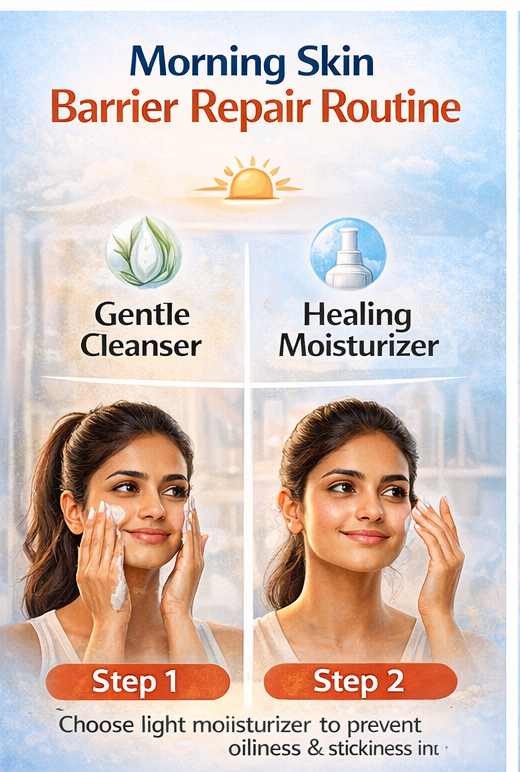
- Gentle cleanser or plain water
- Barrier-repair moisturizer
- Broad-spectrum sunscreen
Night Routine
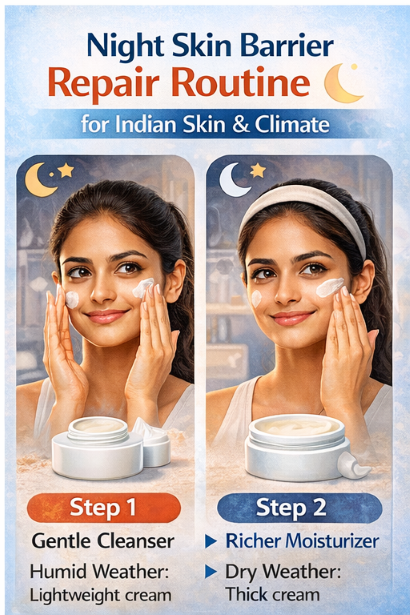
- Gentle cleanser
- Barrier-repair moisturizer (slightly richer than daytime)
Climate Tips
- In humid weather, use lightweight moisturizers
- In dry or winter weather, use thicker creams
- Avoid over-washing due to sweating
- Blot sweat gently instead of wiping harshly
From a pharmacist’s view, routine consistency matters more than product quantity.
Pharmacist’s Final Advice–My Honest Experience
Over the years, I have seen many people damage their skin in the search for fast glow and instant fairness. Social media trends and aggressive skincare routines often ignore one basic truth: skin health comes before skin beauty.
The skin barrier is not something you can replace overnight. Once damaged, it needs time, care, and respect to heal. Expensive products, strong actives, and shortcuts only make the problem worse.
As a pharmacist, my advice is simple:
- Understand your skin
- Avoid self-medication with skincare
- Stop chasing instant results
- Protect your skin daily
When your skin barrier becomes strong, glow follows naturally. Healthy skin is calm, comfortable, and balanced—and that is the real beauty worth maintaining.
Frequently Asked Questions (FAQs)
1. How do I know if my skin barrier is damaged?
If your skin burns, stings, feels tight after washing, becomes red easily, or reacts to products that earlier suited you, these are common signs of a damaged skin barrier
2. Can oily or acne-prone skin have a damaged barrier?
Yes. Many people think only dry skin has barrier issues, but oily and acne-prone skin often has a damaged barrier due to over-cleansing, harsh products, and frequent exfoliation.
3. Should I stop all skincare if my barrier is damaged?
You should stop harsh and active products, not basic skincare. Gentle cleansing, moisturizing, and sunscreen are essential during barrier repair
4. Is niacinamide safe for repairing the skin barrier?
Yes, low-strength niacinamide (around 2–5%) can support barrier repair by reducing inflammation and improving hydration. High concentrations should be avoided during healing.
5. How long should I avoid actives like retinol and acids?
Avoid actives until your skin no longer burns, stings, or feels tight. For most people, this takes 4–6 weeks, sometimes longer if damage is severe.
6. Can home remedies repair the skin barrier?
Some gentle practices like avoiding harsh products and maintaining hydration help, but applying DIY remedies without understanding skin condition can worsen damage.
7. When should I see a dermatologist?
If redness, burning, acne, or irritation continues despite gentle care for several weeks, consult a dermatologist. Some cases need medical treatment.

Pingback: 7-Best Moisturizing Ingredients for Dry Skin