Niacinamide for Skin: Benefits
Niacinamide has become one of the most trusted skincare ingredients recommended by dermatologists and pharmacists worldwide. It is widely used in serums, moisturizers, sunscreens and treatment products because it supports multiple skin concerns at the same time.
Niacinamide is a form of vitamin B3, a water-soluble vitamin that plays an important role in maintaining healthy skin barrier function, reducing inflammation, and improving overall skin appearance.
From a pharmacist’s perspective, niacinamide is considered one of the safest and most versatile skincare ingredients, suitable for almost all skin types including sensitive skin.
In this guide, I will explain the clinically proven benefits of niacinamide, how to use it correctly, and possible side effects so that you can safely include it in your skincare routine.
What is Niacinamide?
Niacinamide, also known as nicotinamide, is a derivative of vitamin B3 that plays a key role in skin health.
In skincare formulations, niacinamide is used because it:
- Strengthens the skin barrier
- Improves skin hydration
- Reduces inflammation and redness
- Controls excess oil production
- Helps reduce pigmentation
Most skincare products contain 2% to 10% niacinamide, which is considered both effective and safe for daily use.
7 Clinically Proven Benefits of Niacinamide for Skin
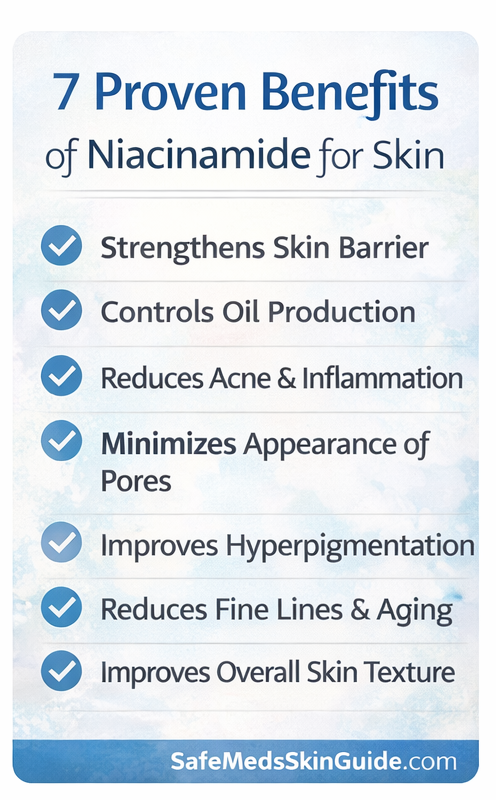
1. Strengthens the Skin Barrier
One of the most important functions of niacinamide is its ability to strengthen the skin barrier.
The outermost layer of the skin acts as a protective barrier that prevents moisture loss and blocks harmful environmental factors such as pollution and bacteria.
Niacinamide helps increase the production of ceramides, which are natural lipids that maintain the skin’s protective layer.
When the skin barrier becomes stronger:
- Skin retains moisture better
- Sensitivity decreases
- Skin appears smoother and healthier
This makes niacinamide especially beneficial for people with dry, sensitive or irritated skin.
2. Controls Excess Oil Production
Niacinamide is widely used in products designed for oily and acne-prone skin.
It helps regulate the activity of sebaceous glands, which are responsible for producing sebum (natural oil).
Excess sebum production can lead to:
- Oily skin
- Enlarged pores
- Acne breakouts
By balancing sebum production, niacinamide helps maintain a healthy oil balance, which keeps the skin hydrated without making it greasy.
3. Reduces Acne and Inflammation
Niacinamide has anti-inflammatory properties, which makes it effective for reducing acne-related redness and irritation.
It works by calming inflamed skin and supporting the healing process.
Many dermatologists recommend niacinamide for:
- Mild to moderate acne
- Redness and irritation
- Sensitive acne-prone skin
Compared to stronger acne treatments, niacinamide is gentle and well tolerated, making it suitable for long-term use.
4. Minimizes Appearance of Pores
Large pores are commonly associated with oily skin and excess sebum production.
Niacinamide helps reduce the appearance of enlarged pores by:
- Improving skin elasticity
- Regulating oil production
- Smoothing skin texture
While it does not permanently shrink pores, consistent use can make them appear smaller and less noticeable.
5. Improves Hyperpigmentation
Hyperpigmentation is one of the most common skin concerns.
Niacinamide helps reduce dark spots by inhibiting the transfer of melanin to skin cells.
With regular use, niacinamide can help improve:
- Dark spots
- Sun spots
- Post-acne marks
- Uneven skin tone
Most users begin to notice improvement in pigmentation within 4–8 weeks of consistent use.
6. Reduces Fine Lines and Signs of Aging
Niacinamide also supports anti-aging skincare routines.
It helps improve the skin’s elasticity and stimulates cellular repair processes that reduce visible signs of aging.
Benefits include:
- Smoother skin texture
- Reduced fine lines
- Improved skin firmness
- Healthier skin appearance
This makes niacinamide a valuable ingredient in preventive anti-aging skincare.
7. Improves Overall Skin Texture
Regular use of niacinamide improves overall skin quality by supporting hydration, repairing damage, and balancing oil production.
Over time, users may notice:
- Softer skin
- Brighter complexion
- Reduced redness
- More even skin tone
Because of these multiple benefits, niacinamide is often referred to as a “multi-benefit skincare ingredient.”
How to Use Niacinamide in Your Skincare Routine
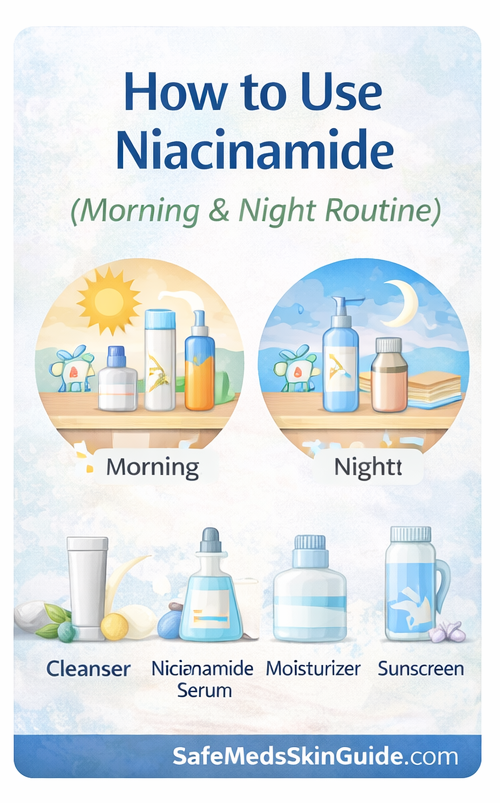
To achieve the best results, niacinamide should be used consistently as part of a daily skincare routine.
General guidelines include:
Morning routine
- Gentle cleanser
- Niacinamide serum
- Moisturizer
- Sunscreen
Night routine
- Cleanser
- Niacinamide serum
- Moisturizer
Niacinamide works well with many ingredients including:
- Hyaluronic acid
- Ceramides
- Retinol
- Peptides
However, beginners should start with lower concentrations (2–5%) to avoid irritation.
Possible Side Effects of Niacinamide
Niacinamide is generally considered very safe for topical use, but mild side effects may occur in some individuals.
Possible reactions include:
- Mild redness
- Temporary irritation
- Slight burning sensation
These reactions are uncommon and usually occur when using high concentrations above 10%.
As a pharmacist, I always recommend performing a patch test before using any new skincare product.
FAQ
What does niacinamide do for the skin?
Niacinamide helps strengthen the skin barrier, control oil production, reduce acne inflammation, improve pigmentation, and enhance overall skin texture.
Can niacinamide be used every day?
Yes. Niacinamide is safe for daily use and can be applied both in morning and night skincare routines.
Is niacinamide good for acne?
Yes. Niacinamide helps reduce inflammation and regulate oil production, which can improve acne and prevent breakouts.
What percentage of niacinamide is best?
Most dermatologists recommend 2% to 5% niacinamide for beginners. Higher concentrations such as 10% may be used for specific skin concerns.
Can niacinamide be used with vitamin C?
Yes. Modern research shows that niacinamide and vitamin C can be safely used together in skincare routines.
How long does niacinamide take to show results?
Visible improvements in skin texture, oil control, and pigmentation are usually seen within 4 to 8 weeks of consistent use.
Is niacinamide suitable for sensitive skin?
Yes. Niacinamide is generally well tolerated and suitable for sensitive skin when used in moderate concentrations.