Whenever you purchase a medicine, most people usually check only the name and expiry date. The rest of the information printed on the label is often ignored.
But as a practicing pharmacist, I can confidently tell you:
The medicine label is your first and most important safety guide.
It contains critical details about:
- How to take the medicine correctly
- When and how often to take it
- What precautions to follow
- Possible side effects and warnings
In my daily practice, I have seen many patients facing problems simply because they did not read or understand the label properly.
The good news is-learning to read medicine labels is simple. Once you understand the basics, you can avoid common medication mistakes and use medicines safely.
🧾 What Is a Medicine Label?
A medicine label is the information printed on the packaging, strip, or bottle of a medicine. It is designed to guide patients, pharmacists, and doctors for safe usage.
Depending on the type of medicine (tablet, syrup, cream, injection), the label may look slightly different-but the purpose is always the same:
To ensure safe and effective use of the medicine.
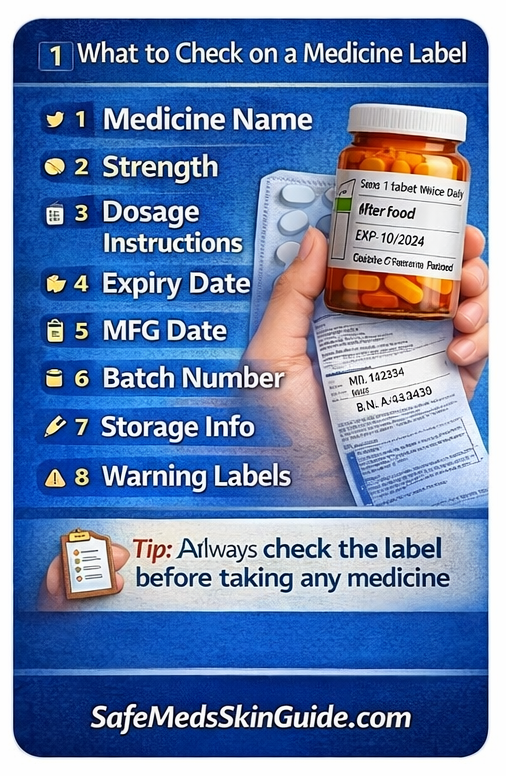
It includes:
- Drug name (brand + generic)
- Strength and dosage
- Instructions for use
- Warnings and precautions
- Expiry and storage details
Whether it’s a simple tablet or a prescription drug, never ignore the label.
Key Parts of a Medicine Label
Let’s understand each part in a simple and practical way.
1.Medicine Name (Brand Name + Generic Name)
Every medicine has two names:
- Brand Name → Given by the company
- Generic Name → Actual active drug
Example:
Crocin = Brand name
Paracetamol = Generic name
Why this is important:
Many people unknowingly take:
- Two different brands
- But same generic drug
This leads to double dosing, which can be dangerous.
Pharmacist tip: Always check the generic name, especially if you are taking multiple medicines.
2. Strength of the Medicine
This tells you how much of the active drug is present in one dose.
Example:
- Paracetamol 500 mg
- Paracetamol 650 mg
Even though the name is same, strength is different.
Why it matters:
Taking higher strength accidentally can cause:
- Overdose
- Liver damage (in case of paracetamol)
Always double-check the strength before taking the medicine.
3 . Dosage Instructions (Most Important Section)
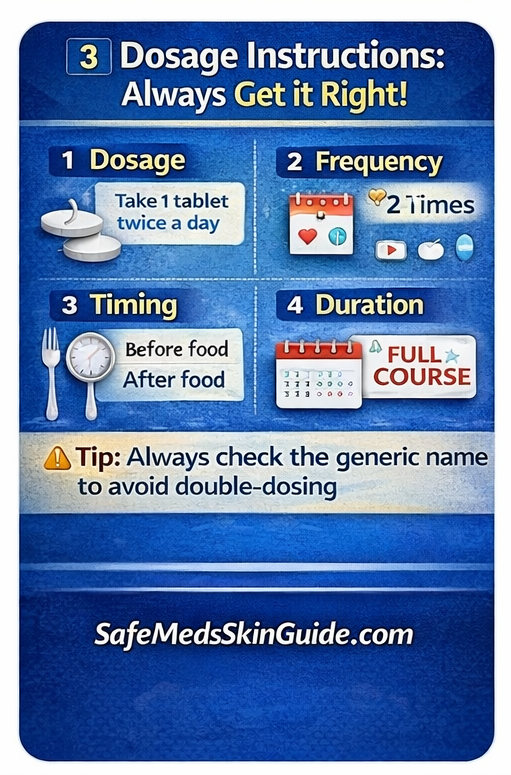
This section tells you:
- How many tablets/syrup to take
- How many times a day
- Before or after food
- Duration of treatment
Example:
“Take 1 tablet twice daily after meals”
Common mistakes I see:
- Taking medicine more frequently
- Ignoring food instructions
- Stopping early
Pharmacist advice: Follow dosage exactly as prescribed. Do not guess.
4. Expiry Date
Every medicine has a clearly printed expiry date.
Format: EXP: MM/YYYY
Important points:
- Do not use medicines after expiry
- Liquid medicines expire faster after opening
- Eye drops are usually safe only for 1 month after opening
Expired medicines may not work properly and can sometimes be unsafe.
5. Manufacturing Date (MFG)
This shows when the medicine was produced.
It helps you:
- Identify old stock
- Understand shelf life
Especially useful when buying medicines in bulk.
6. Batch Number
This is a unique code assigned to a specific batch of medicine.
Why it matters:
- Helps track product quality
- Important in case of product recall
- Useful for complaints or adverse effects
This may not seem important for daily use, but it is critical in quality control.
7. Storage Instructions
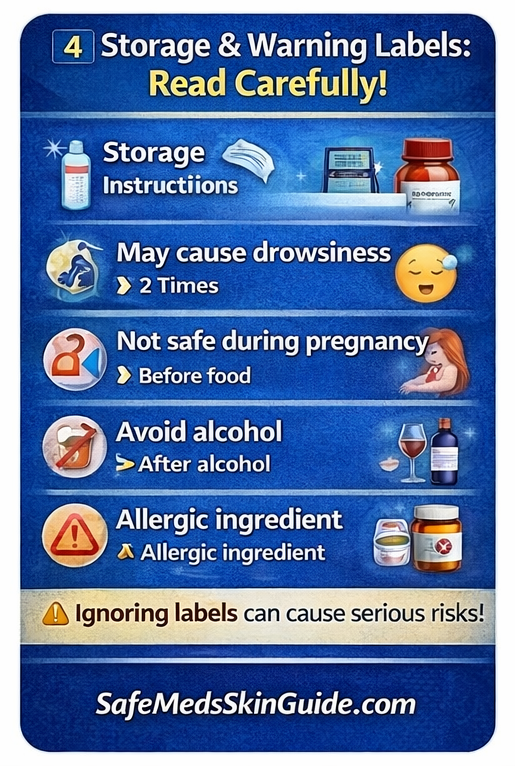
Medicines are sensitive to environmental conditions.
Common instructions include:
- Store in a cool and dry place
- Protect from sunlight
- Keep refrigerated (if required)
Common mistakes:
- Keeping medicines in bathroom
- Leaving them in hot vehicles
- Exposing to direct sunlight
This can reduce effectiveness or spoil the medicine.
Always follow storage instructions strictly.
8. Warning Labels & Precautions
These are very important but often ignored.
Examples include:
- “May cause drowsiness”
- “Avoid alcohol”
- “Not safe during pregnancy”
- “Use under medical supervision”
Why they matter:
Ignoring warnings can lead to:
- Accidents (like driving after sedative medicines)
- Serious side effects
- Harm during pregnancy
Always read warnings carefully before use.
9. Prescription Symbol (Rx / Schedule Drug)
If you see:
Rx symbol
It means:
- Prescription required
- Should not be used without doctor advice
These medicines are stronger and need medical supervision.
10. Ingredients List (Very Important for Safety)
This section shows:
- Active ingredients
- Sometimes inactive ingredients
Why it matters:
- Avoid allergic reactions
- Prevent duplicate medicines
- Identify combination drugs
Especially important for patients taking multiple medicines.
⚠ Common Mistakes People Make
From my real pharmacy experience, people often:
- Skip reading labels completely
- Ignore dosage instructions
- Do not check generic name
- Use expired medicines
- Misunderstand “before/after food” instructions
These small mistakes can lead to big health problems.
Practical Pharmacist Tips for Safe Use
✔ Always read the label before first use
✔ Recheck instructions even for familiar medicines
✔ Never assume dosage
✔ Keep medicines organized
✔ Ask your pharmacist if confused
A pharmacist is always available to guide you-don’t hesitate to ask.
👨👩👧 Special Advice for Families
For Children
- Use correct measuring tools
- Never guess dosage
For Elderly
- Use pill organizers
- Maintain medicine list
For Chronic Patients
- Follow schedule strictly
- Avoid skipping doses
Final Words from a Practicing Pharmacist
In my daily pharmacy practice, I have seen that many medicine-related problems are not due to the medicine itself—but due to lack of awareness about how to use it properly.
The medicine label is not just a piece of printed information-it is a complete safety guide designed to protect you.
By spending just a few extra seconds reading the label, you can prevent:
- Wrong dosage
- Drug interactions
- Side effects
- Treatment failure
Medicine safety begins with awareness, and reading the label is the first and most important step.
Develop this simple habit, and you will make your treatment safer, more effective, and more reliable for yourself and your family.
FAQs
1. Why is it important to read medicine labels?
Medicine labels provide complete instructions for safe use, including dosage, warnings, and precautions.
2. What does “Rx” mean on medicine?
It indicates that the medicine should only be used with a doctor’s prescription.
3. Can I use medicine after expiry date?
No. Expired medicines may lose effectiveness and may not be safe
4. What is the difference between generic and brand name?
Generic name is the actual drug, while brand name is given by the manufacturer.
5. Why should I follow storage instructions?
Improper storage can damage the medicine and reduce its effectiveness.
6. What should I do if I don’t understand the label?
You should consult a pharmacist or doctor for proper guidance.
7. Can I take two medicines with the same ingredient?
No. It can lead to overdose and increase risk of side effects.