
(A Simple, Safe Guide by an Experienced Pharmacist)
As a pharmacist, I see people every day spending a lot of money on skin care products but still complaining about dull skin, acne, or irritation. The biggest problem is not the product -it is wrong routine, wrong expectations, and lack of consistency. In today’s fast-paced world, skincare is often misunderstood as a journey toward achieving a “fairer” complexion. However, true skincare has nothing to do with changing your natural skin tone and everything to do with skin health. Think of your skin as a protective shield; its job is to keep infections out and moisture in. When we focus on health rather than color, we prioritize a strong skin barrier, hydration, and protection from UV damage. Healthy skin glows naturally because it is functioning well, not because it has been bleached or altered.
A major challenge today is the influence of social media. Many people fall into the trap of following “viral” routines or “skin-lightening” hacks shared by influencers who may not have medical backgrounds. This often leads to common mistakes, such as over-exfoliating with harsh acids, mixing incompatible ingredients, or using strong steroids without a prescription. These random routines can strip the skin’s natural oils, leading to sensitivity, breakouts, and long-term damage. Just because a product works for a video creator doesn’t mean it is safe for your unique skin type.
Healthy, glowing skin does not come from fairness creams or viral reels. It comes from protecting your skin barrier, using the right products, and following a routine that suits your skin type. the best approach to skincare is rooted in three pillars: simplicity, safety, and consistency. As a pharmacist Let me explain this step by step, in the simplest way possible.
Understanding Your Skin Type
Before starting any skin care routine, the most important thing you must understand is your skin type. As a pharmacist, I see many people using expensive products that are completely wrong for their skin, and then blaming the brand or their skin.
Every skin behaves differently because of genetics, climate, hormones, diet, and lifestyle. A product that works well for your friend may silently damage your skin over time.
Skin types are commonly divided into:
- Dry skin – feels tight, rough, may flake, worsens in winter
- Oily skin – shiny appearance, enlarged pores, acne-prone
- Combination skin – oily forehead and nose, dry cheeks
- Normal skin – balanced, not too oily or dry
- Sensitive skin – reacts easily with redness, itching, or burning
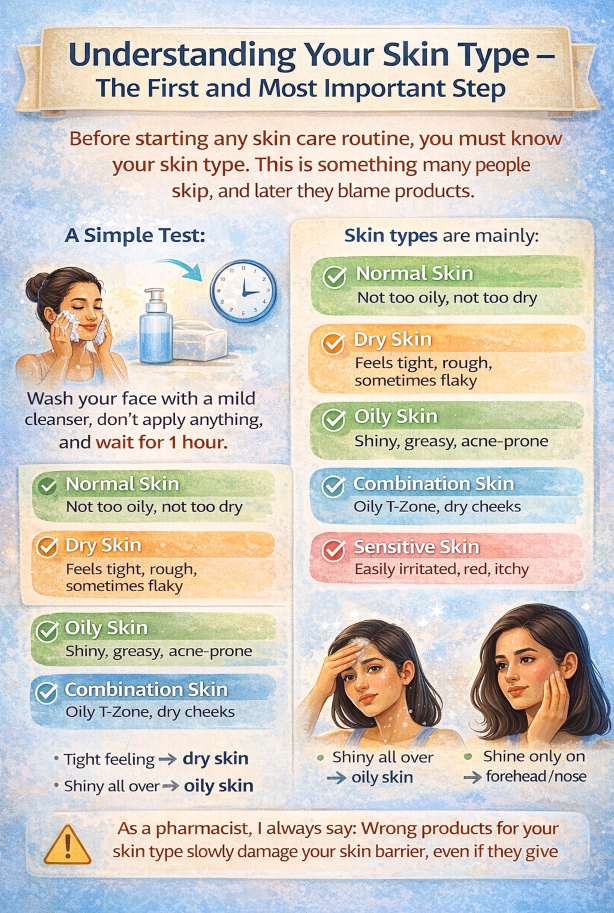
A simple test at home helps: wash your face with a mild cleanser, do not apply anything, and wait one hour. Observe how your skin feels. This gives a fairly accurate idea.
- Tight feeling = dry skin
- Shiny all over= oily skin
- Shine only on forehead/nose = combination skin
As a pharmacist, I always say: wrong products for your skin type slowly damage your skin barrier, even if they give temporary glow.
Why this matters:
Using the wrong products can damage the skin barrier, which is the skin’s natural protective layer. Once this barrier is damaged, problems like acne, pigmentation, sensitivity, and dullness start appearing.
From my professional experience, most skin problems start not because of lack of products, but because of wrong product selection.
Morning Skin Care Routine
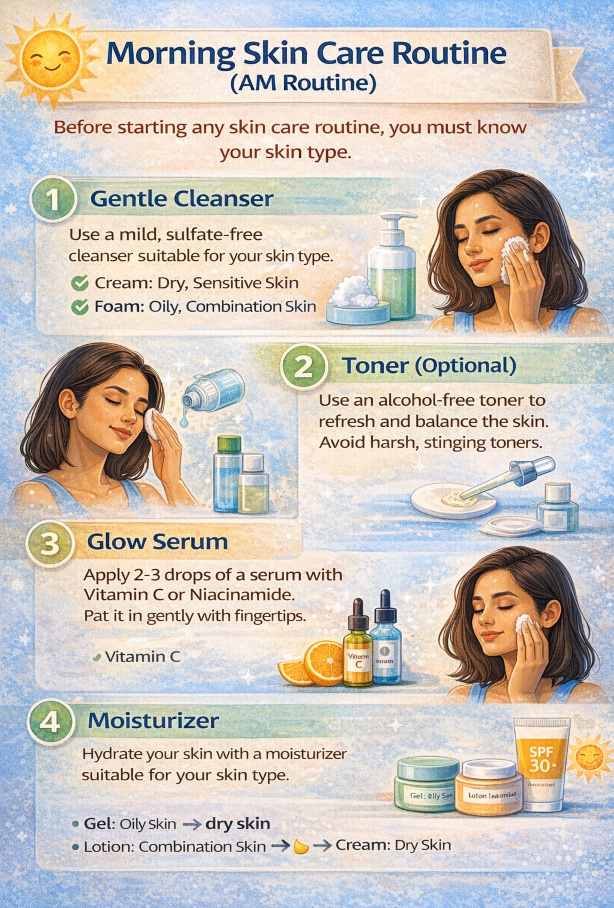
Step 1: Gentle Cleanser
Cleansing removes dirt, sweat, oil, and pollution that sit on your skin overnight. Many people think “strong cleanser = clean skin”, which is completely wrong.
Harsh cleansers strip natural oils and make skin dull, dry, or more oily as a reaction.
Choose:
- Dry skin → cream or milk cleanser
- Oily skin → gel-based gentle cleanser
- Sensitive skin → fragrance-free cleanser
Wash only twice a day. Overwashing is one of the most common mistakes I see.
Step 2: Toner-Do You Really Need It?
Toners are optional. Earlier, toners were used to remove soap residue. Today, cleansers are better, so toner is not mandatory.
If you use a toner:
- Choose alcohol-free
- Look for soothing ingredients like rose water, glycerin, or niacinamide
Avoid strong, stinging toners. Tingling does NOT mean it is working. As a pharmacist, I warn people that repeated irritation leads to pigmentation and sensitivity over time.
Step 3: Serum-Targeted Skin Care
Serums contain concentrated ingredients and work deeply.
For beginners:
- Vitamin C – helps in glow and pigmentation
- Niacinamide – controls oil, improves texture
Use only 2–3 drops. More is not better. Apply on slightly damp skin and wait before the next step.
Many people layer too many serums together. This often causes breakouts and irritation.
Step 4: Moisturizer-Even If You Have Oily Skin
Skipping moisturizer is one of the biggest skin care myths in India.
When you don’t moisturize:
- Dry skin becomes more dry
- Oily skin produces even more oil
Choose:
- Gel for oily skin
- Lotion for normal/combination skin
- Cream for dry skin
A good moisturizer strengthens your skin barrier and keeps skin healthy in the long term.
Step 5: Sunscreen-The Real Secret of Glow
No skin care routine works without sunscreen. Period.
Sun damage causes:
- Dullness
- Pigmentation
- Early aging
Use:
- SPF 30 or higher
- Broad spectrum
- Apply 2 finger lengths for face and neck
Even indoors, if you are near windows or screens, sunscreen is important. As a pharmacist, I see pigmentation cases mostly because people ignore sunscreen.
Night Skin Care Routine
Step 1: Cleansing at Night
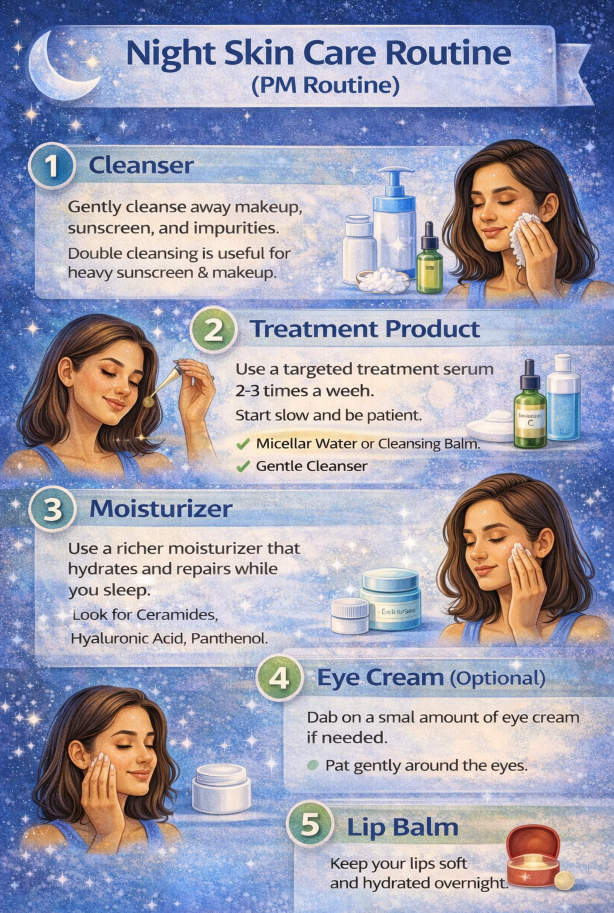
At night, cleansing removes sunscreen, pollution, and dirt collected during the day.
If you use heavy sunscreen or makeup:
- Use a gentle first cleanse (micellar water or cleansing balm)
- Follow with your regular cleanser
This prevents clogged pores and acne.
Step 2: Treatment Products (Use Carefully)
Night time is for repair.
Beginner-friendly actives:
- Retinol (low strength) – improves texture and aging signs
- Alpha Arbutin – helps pigmentation
Use actives 2–3 times a week, not daily. Overuse is the main reason people damage their skin.
Step 3: Night Moisturizer
At night, skin repairs itself. A nourishing moisturizer supports this natural process.
Look for ingredients like:
- Ceramides
- Hyaluronic acid
- Panthenol
Keep night routine simple. Your skin does not need 10 products.
Weekly Skin Care-Do’s and Don’ts
Exfoliation
Exfoliation removes dead skin, but too much causes damage.
- Once a week is enough
- Avoid harsh scrubs
- Chemical exfoliation is safer when used properly
If your skin burns or peels, stop immediately.
Face Masks
Masks are helpful but not magical.
- Clay masks → oily skin
- Hydrating masks → dry skin
Once a week is enough. DIY masks should be used carefully – lemon, baking soda, and toothpaste are dangerous for skin.
Lifestyle Habits That Affect Skin Glow
Skin reflects your lifestyle.
- Poor sleep causes dull skin
- Dehydration worsens dryness
- High sugar and junk food increase acne
- Stress affects hormones and skin healing
Skin care products work better when lifestyle is balanced.
Common Skin Care Mistakes I See as a Pharmacist
- Copying influencer routines blindly
- Using too many actives together
- Changing products too frequently
- Ignoring patch tests
Consistency matters more than brand names.
FINAL WORDS FROM AN EXPERIENCED PHARMACIST
As a pharmacist, my biggest advice is this: treat your skin gently and consistently. Skin care is not about perfection or overnight results. It is about daily protection and long-term care.
I see many people harming their skin by chasing instant glow through harsh treatments, frequent product changes, or social media trends. Skin does not heal that way. It heals through balance.
Healthy skin comes from:
- Using fewer, well-chosen products
- Protecting the skin from sun damage
- Respecting the skin’s natural repair cycle
- Maintaining a healthy lifestyle
Your skin remembers how you treat it. If you care for it patiently, it will reward you over time
Frequently Asked Questions (FAQs)
1. How long does it take to see results from a skincare routine?
As a pharmacist, I always explain that skincare needs patience and consistency. Most people start noticing small improvements like better hydration or smoother texture within 2–3 weeks. Visible changes such as reduced acne, glow, or even skin tone usually take 6–8 weeks, because skin renews itself slowly. If you keep changing products every few days, your skin never gets a chance to heal properly. Stick to one routine for at least a month before judging results.
2. Is a basic skincare routine enough, or do I need many products?
A basic routine is more than enough for healthy skin. Cleanser, moisturizer, and sunscreen in the morning, and cleanser plus moisturizer at night are the foundation. From my professional experience, many skin problems happen because people use too many active products together. Once your skin barrier is strong, you can add treatments like vitamin C or retinol slowly if needed. More products do not mean better skin.
3. Can I skip sunscreen if I stay indoors?
No, sunscreen should not be skipped, even indoors. UVA rays can pass through windows, curtains, and glass, and they cause long-term skin damage like pigmentation and premature aging. As a pharmacist, I have seen people with dark spots despite staying indoors most of the time. Using sunscreen daily protects your skin barrier and prevents future skin issues.
4. How do I choose products according to my skin type?
Choosing products based on your skin type is very important. Dry skin needs hydrating and barrier-repair ingredients, while oily skin needs lightweight, non-comedogenic formulas. Sensitive skin should avoid strong fragrances and harsh actives. Using the wrong products may give temporary glow but slowly damages your skin barrier. Always read labels and keep your routine simple.
5. Is it safe to use active ingredients every day?
Not always. Ingredients like retinol, exfoliating acids, and strong acne treatments should be used 2–3 times a week, especially for beginners. Daily overuse can cause redness, dryness, and breakouts. As a pharmacist, I advise starting slowly and increasing frequency only if your skin tolerates it well. Skin health is about balance, not speed.
6. What is the biggest skincare mistake people make?
The biggest mistake is copying someone else’s routine without understanding their own skin type. Social media trends often promote products that may not suit everyone. As a pharmacist, I always say: skincare should be personal, gentle, and consistent. Listen to your skin, not just online trend
7. Can men follow the same skincare routine?
Yes, absolutely. Skin structure is similar for both men and women. The only difference is shaving-related sensitivity in men. A simple routine of cleanser, moisturizer, and sunscreen works for everyone. In my experience, men often ignore skincare until problems appear, but early care prevents long-term damage.


Pingback: Why Your Skin Is Not Glowing ? after-using-skincare-products